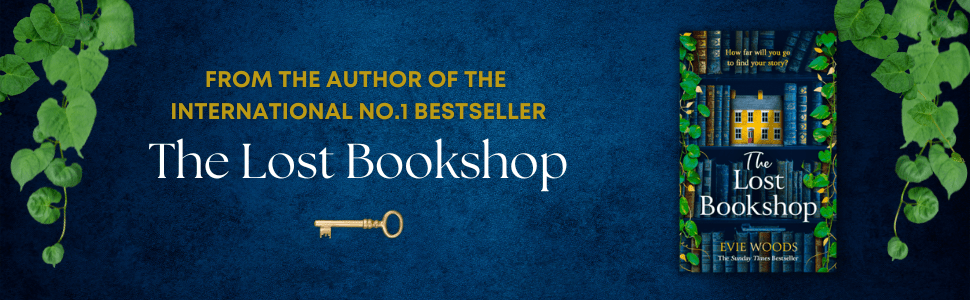
THE LOST BOOKSHOP
Book Club Questions
- Opaline’s love of books is what guides her through life, like talismans and passports of escape. As a reader, what do books mean to you? How have books impacted your life?
- Were there any significant plot twists that surprised you?
- Did the book provoke any emotional responses from you? Which scenes stood out in terms of their impact?
- What did you make of the magical elements in the book? Did they add to your experience of the bookshop?
- The plot highlights the impact of living in a patriarchal society in both timelines. What is your assessment of the male characters in the book and how their storylines developed?
- Were there any lines or passages that stood out to you or that you highlighted?
- Did the different settings make you eager to visit the locations mentioned in the book?
- What was your impression of Saint Agnes’s and Opaline’s experience there? Have you read/seen anything on the topic of asylums before?
- Magical feminism is one of the genres explored in this story, to challenge societal norms and give women agency and empowerment. How did you experience this aspect of the story?
- Intergenerational trauma is another significant theme, with each character facing the repercussions of the previous generations actions. What is your opinion on the subject?
- The novel includes a fictional excerpt from Emily Brontë’s second novel. If you could discover a missing manuscript, what would it be?
- The book is full of references to other books. Have you read any of them or found any new recommendations?
- What has changed for women, as regards opportunities and equality, from Opaline’s time to Martha’s? What has not changed?
- There is some serious subject matter in this book – domestic violence, war, alcoholism to name a few. Do you feel like it was handled well? Were they balanced out by lighter moments?
- Madame Bowden appears as a strong female archetype. In an allegorical sense, what do you think she represents?
- The strange cracks in the basement of 12 Ha’Penny Lane, which grow into branches, are quite symbolic. What do you think the author’s purpose was here?
- Emily Brontë, Sylvia Beach and Opaline were all women who lived beyond the conventions of their time. In this story, this matriarchal lineage is passed down through books. Why is this so significant, especially in light of Martha’s story?
- Do you have a favourite line (or more!) from a book or a poem that you would consider having tattooed?
- Why do you think the bookshop appears and disappears to certain people?
- Ultimately, The Lost Bookshop is a hopeful story of healing and finding your path in life. Has the story inspired you in your own life?
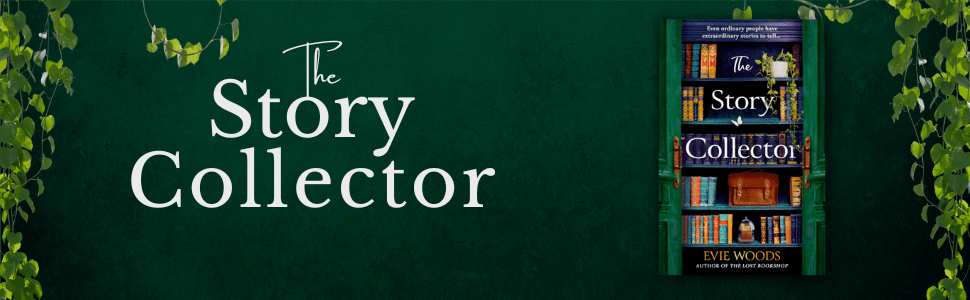
THE STORY COLLECTOR
Book Club Questions
- The Story Collector is rooted in the idea that supernatural beings can in the lives of humans. Did you find this interesting and what did it mean to you?
- Butler’s Cottage and Thornwood House are like two opposing forces in this book. What was your impression of each household?
- One of the main themes of the novel is the preservation of culture and old traditions. Do you feel that this is an important endeavour?
- Who was your favourite character in the book and why?
- The dual timeline narrative, along with the diary entries are employed to explore the history of Thornwood and its inhabitants. Do you feel these elements worked well?
- Evie Woods has written a novel that features stories within stories. How did that add to your reading experience?
- Do you think there is an ideal time of year to read this book and if so, which season would you pick?
- Did The Story Collector pique your curiosity about Irish folklore? Did you discover anything new?
- Nature is a strong theme in the book and the landscape is almost another character in the book. Do you think the author successfully immersed the reader in the setting?
- Do you have your own superstitions and if so, what are they?
Book Club Questions
- How does the protagonist’s initial reaction to Compiègne change over time? What does this suggest about expectations versus reality?
- Discuss the various ways food and baking serve as metaphors throughout the novel. What deeper meanings do they represent?
- How do themes of family history and legacy shape the story and its characters?
- What role does the bakery itself play in bringing characters together? How does it influence the community around it?
- How does the author use sensory details – smells, tastes, sounds – to enhance the reading experience?
- Discuss how tradition and progress are balanced within the narrative. Which characters represent each side?
- What role does community play in the story? How do different characters find their place within it?
- Consider the various relationships portrayed in the novel. How do they evolve throughout the story?
- How does the author use French culture and settings to enhance the narrative?
- Discuss the importance of recipes and baking techniques in the story. What might they symbolise beyond their literal purpose?
- How do secrets – both kept and revealed – drive the plot forward?
- What role does music play in developing the atmosphere of key scenes?
- How does the author explore the concept of ‘home’ throughout the novel?
- Discuss how different characters approach change and adaptation throughout the story.
- What message does the novel convey about preserving cultural heritage in modern times?
 Evie Woods